
Sea Buckthorn · · Aham Swasthi
Updated · General nutrition information, not medical advice
Sea Buckthorn Juice: Benefits, Nutrition, Uses & Side Effects
Sea buckthorn juice benefits at a glance
Sea buckthorn juice benefits are mainly linked to its naturally occurring vitamin C and plant compounds, including carotenoids and flavonoids. Nutrient amounts vary by product, and human research is limited. Juice, pulp and oil are different preparations; none should be treated as a cure or a replacement for medical care.
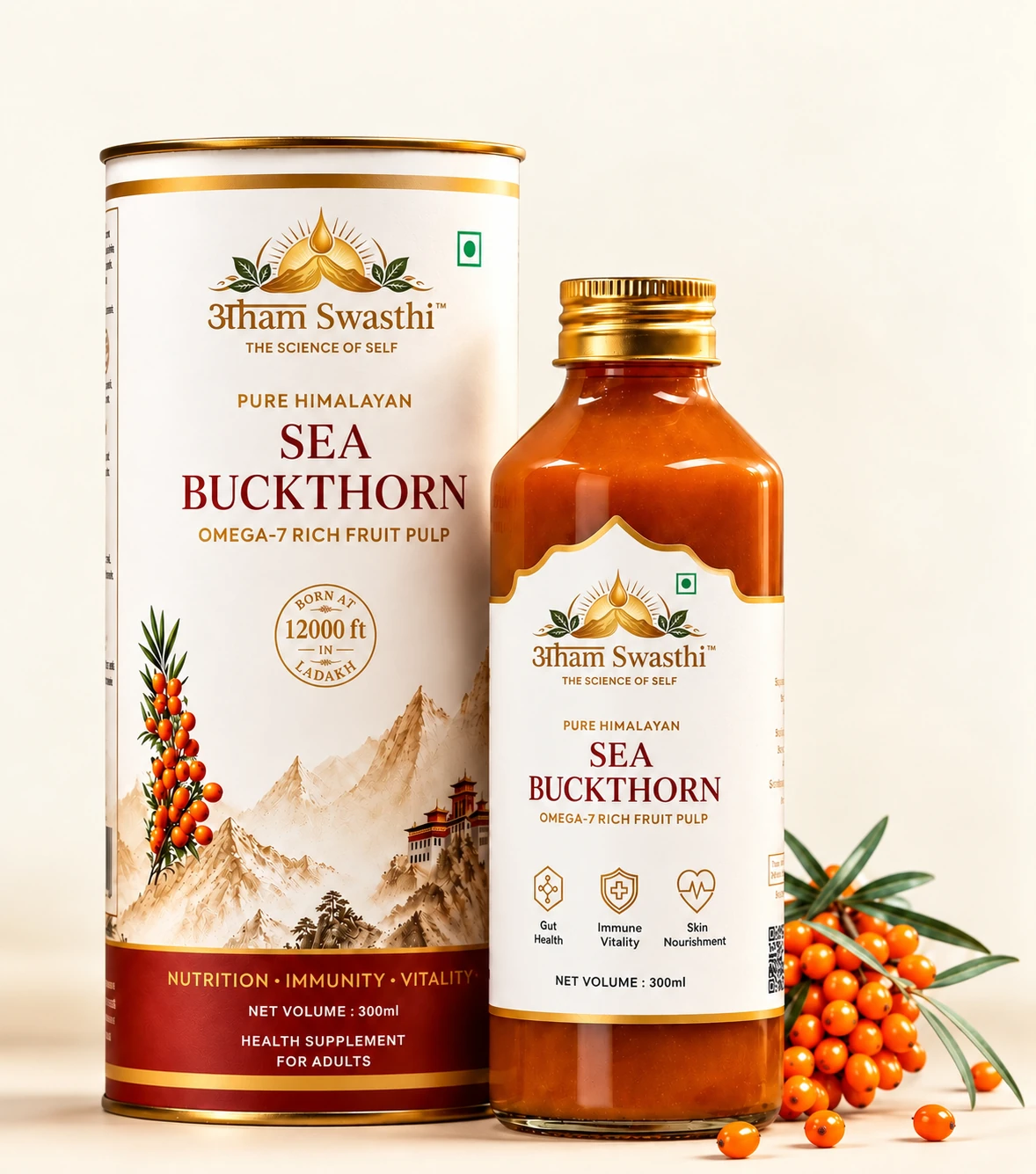
Sea buckthorn juice is a fruit beverage made from the bright orange berries of Hippophae rhamnoides, a plant traditionally found across parts of Asia and Europe. The berries contain naturally occurring nutrients and plant compounds, including vitamin C, carotenoids and flavonoids. The exact nutritional profile varies with the fruit, preparation and processing method.
What makes sea buckthorn juice different, what potential benefits are supported by research, and how can it be included in a balanced diet? This guide explores its nutritional value, potential benefits, ways to consume it, possible side effects and what to consider when choosing a sea buckthorn product.
What Is Sea Buckthorn Juice?
Sea buckthorn (Hippophae rhamnoides) is a thorny shrub that produces small orange berries and is associated with cold, mountainous environments. Because the berries taste sharp and acidic, they are usually processed into juice, pulp, concentrates, jams and other foods rather than eaten raw in large amounts.
Sea buckthorn juice is the liquid pressed from these berries, sometimes filtered and sometimes diluted or blended. It is different from sea buckthorn oil and concentrated extracts: the composition changes with the plant variety, growing conditions, processing and storage, so evidence about one preparation should not automatically be applied to another.
Nutritional Value of Sea Buckthorn Juice
Published analyses of sea buckthorn berries and juices have identified vitamin C, carotenoids, flavonoids, phenolic compounds, tocopherols and fatty acids. The amount present in a finished product depends on its formulation and processing.
| Component | General nutritional context |
|---|---|
| Vitamin C | Contributes to normal immune function, normal collagen formation and the protection of cells from oxidative stress. |
| Carotenoids | Naturally occurring plant pigments that give the berries their orange colour. |
| Flavonoids and other phenolic compounds | Plant compounds studied for antioxidant activity, mostly in laboratory settings. |
| Fatty acids | Berries, pulp and oils have different fatty-acid profiles; amounts depend on the part of the plant and the preparation. |
| Tocopherols | Forms of vitamin E found in sea buckthorn. |
| Minerals | Contribute to overall composition; levels vary by product. |
Do not assume every sea buckthorn drink contains the same nutrient levels. For exact amounts, refer to the nutrition panel or a laboratory analysis for the specific product.
Potential Benefits of Sea Buckthorn Juice
Most discussion of sea buckthorn juice benefits combines two different kinds of information: the established functions of nutrients it contains, and preliminary research on sea buckthorn itself. The sections below keep these separate. Laboratory and animal findings do not necessarily predict effects in people.
Vitamin C and normal immune function
Established nutrient function: vitamin C contributes to the normal function of the immune system. Sea buckthorn berries naturally contain vitamin C, but processing, heat and storage can reduce it, so the amount in a commercial juice or pulp should be checked on its label or lab analysis rather than assumed. Drinking sea buckthorn juice has not been shown to prevent infections.
Antioxidant compounds in sea buckthorn
Sea buckthorn contains carotenoids, flavonoids and other phenolic compounds. Laboratory studies have measured antioxidant activity in some sea buckthorn preparations. Laboratory antioxidant activity is not the same as a proven health effect in people, and these findings do not show that the juice detoxifies the body or prevents disease.
Vitamin C and normal collagen formation
Established nutrient function: vitamin C contributes to normal collagen formation, which is relevant to the normal function of skin, blood vessels, bones and cartilage. This is a general role of the nutrient; it does not mean sea buckthorn juice delivers clearer skin, anti-ageing results or treatment of any skin condition.
What research says about cardiovascular and metabolic health
Researchers have studied different sea buckthorn preparations in relation to cholesterol, blood sugar, oxidative stress and other cardiovascular or metabolic markers. Much of this work comes from laboratory and animal studies, with a smaller number of small human trials using specific preparations, often oil or extracts rather than juice. Results are preliminary and do not establish that sea buckthorn juice prevents heart disease, lowers cholesterol or replaces prescribed treatment.
Anyone managing high cholesterol, high blood pressure, diabetes or cardiovascular disease should continue following their clinician's advice and discuss any concentrated botanical product before adding it to their routine.
Nutritional variety and dietary use
For people who enjoy its tart flavour, sea buckthorn juice or pulp can add variety to their usual fruit choices. Its fatty-acid content, including omega-7 discussed in relation to sea buckthorn, varies widely between pulp, juice, seed oil and berry oil, so no specific dose or outcome should be inferred for a given product. It should complement a balanced diet rather than replace whole fruits and vegetables.
Sea Buckthorn Juice vs Sea Buckthorn Pulp
Juice and pulp come from the same berries but are prepared differently. The differences below are general and depend on how each product is filtered and processed.
| Sea buckthorn juice | Sea buckthorn pulp | |
|---|---|---|
| Preparation | Pressed liquid; may be filtered, diluted or blended. | Crushed or pureed fruit with more of the fruit material retained. |
| Texture | Usually thinner and smoother. | Thicker and more opaque. |
| Fibre and fruit solids | Filtering can remove much of the fruit solids and fibre. | Often retains more fruit solids; actual fibre content varies by product. |
| Typical use | Drunk as a beverage, often diluted. | Diluted with water or mixed into smoothies and foods as directed. |
Neither form has a fixed nutrient or fibre amount. Read the label of the specific product to compare. For more on the fruit itself, see our sea buckthorn collection.
How to Consume Sea Buckthorn Juice
How you use sea buckthorn depends on whether it is ready-to-drink juice, concentrate or pulp. Always follow the directions on the product label rather than a generic serving size from a different product.
- Dilute the recommended serving with water if the label suggests it; the strong, tangy taste is easier to enjoy diluted.
- Blend it into a smoothie or mix it with another drink or food, provided this fits the product instructions.
- Take it alongside a meal or snack if that suits you.
- Store it as directed and use it within the stated period after opening.
Can You Drink Sea Buckthorn Juice Every Day?
Some small human studies have examined regular consumption of specific sea buckthorn preparations for limited periods, but they do not establish one daily amount suitable for everyone or every product. Whether daily use suits you depends on the product, the serving on its label, your overall diet and your health. Do not increase the serving simply because a small quantity is recommended.
Stop using the product if you notice an unusual reaction, and seek medical advice if symptoms persist. If you take medication or have a chronic condition, ask a healthcare professional before regular use.
How to Choose a Sea Buckthorn Product
| Factor | What to check |
|---|---|
| Product type | Whether it is juice, pulp, concentrate or a blend, and any stated fruit percentage. |
| Ingredients | The full ingredient list, including added sugar, flavours or preservatives. |
| Serving guidance | Clear directions for the exact product. |
| Sourcing | Clear, verifiable information about where the fruit comes from. |
| Quality testing | Any disclosed testing and what it actually covers. |
| Packaging and storage | The seal, packaging material, best-before date and storage directions. |
| Manufacturer details | An identifiable seller with contact information. |
Aham Swasthi Natural Sea Buckthorn Pulp
Aham Swasthi Natural Sea Buckthorn Pulp is a 300 ml sea buckthorn fruit pulp packed in a glass bottle. Aham Swasthi describes its sea buckthorn as sourced from Ladakh in the Himalayas. Because it is a pulp rather than a filtered juice, it has a thicker texture and is typically diluted or mixed before drinking, following the label.
Ingredients, nutrition information, recommended use and storage directions are shown on the product label and the product page images. Please check them before purchase rather than relying on general information in this article.
Possible Side Effects and Precautions
Sea buckthorn is consumed as a food in several forms, but long-term safety information for concentrated preparations is more limited than for ordinary foods. Possible concerns depend on the formulation, the amount consumed and the individual.
- Digestive discomfort: the naturally acidic fruit may not suit everyone, especially in larger amounts.
- Allergy or intolerance: stop use if you notice an unusual reaction.
- Blood-thinning medicines: preliminary research has examined effects of sea buckthorn compounds on platelet function; ask a healthcare professional before regular use if you take anticoagulant or antiplatelet medicines.
- Kidney conditions: products may contain minerals such as potassium; people with kidney disease or mineral restrictions should ask their doctor or renal dietitian first.
- Pregnancy, breastfeeding, children or chronic conditions: seek individual professional advice before using concentrated products.
This section is general information and is not a diagnosis or a substitute for professional medical advice.
Frequently Asked Questions
What are the potential benefits of drinking sea buckthorn juice?
Sea buckthorn juice provides naturally occurring vitamin C, carotenoids and flavonoids. Vitamin C contributes to normal immune function and collagen formation; research on sea buckthorn itself is mostly preliminary, and the juice is not proven to prevent or treat disease.
Is sea buckthorn juice a source of vitamin C?
Sea buckthorn berries naturally contain vitamin C, but the amount in a juice or pulp varies with the fruit, processing and storage. Check the product's nutrition information for its actual content.
What does sea buckthorn juice taste like?
It has a naturally tart, tangy and slightly sour fruit flavour, which is why many people dilute it or mix it with other drinks.
How can you drink sea buckthorn juice?
Common options are diluting it with water or adding it to a smoothie. Follow the serving instructions on your specific product.
Can sea buckthorn juice be consumed every day?
There is no universal daily dose. Suitability depends on the individual and the product, so follow the label and ask a healthcare professional if you take medication or have a health condition.
What is the difference between sea buckthorn juice and pulp?
Juice is the pressed, often filtered liquid; pulp is thicker and usually retains more fruit material. Actual differences depend on filtration and processing.
What are the possible side effects of sea buckthorn juice?
Some people may experience digestive discomfort or intolerance. Anyone taking blood-thinning medicines, with kidney disease, or who is pregnant or breastfeeding should seek qualified advice first.
How should sea buckthorn products be stored?
Follow the manufacturer's storage directions on the label, including how to store the product after opening and how long to use it.
Final Takeaway
Sea buckthorn juice is a tangy fruit beverage containing vitamin C, carotenoids and other plant compounds. Its established value comes from these nutrients, while research on wider sea buckthorn juice benefits remains preliminary. Enjoy it as part of a varied diet, follow product directions and seek advice if you have a health condition. To try a pulp format, explore Aham Swasthi Natural Sea Buckthorn Pulp.
Research references
These reviews provide background on composition and research. They do not verify nutrient levels in Aham Swasthi's product or establish sea buckthorn juice as a medical treatment. This article is published by Aham Swasthi, which sells sea buckthorn pulp, and is not a clinical review.
- Why is sea buckthorn (Hippophae rhamnoides L.) so exceptional? A review
Food Research International, 2020 — composition and food-science background; not proof of clinical benefits from juice.
- Bioactive Compounds in Sea Buckthorn and their Efficacy in Preventing and Treating Metabolic Syndrome
Foods, 2023 — review of compounds and different preparations, including laboratory and animal evidence; not a treatment recommendation.
- The impact of sea buckthorn oil fatty acids on human health
Lipids in Health and Disease, 2019 — oil-specific review; findings should not be assumed to apply to juice or pulp.